

AI workloads have traditionally been associated with GPUs due to their impressive parallel processing capabilities. However, is a GPU always the best option? Not necessarily. While GPUs excel in deep learning and large-scale inference, CPUs still hold significant importance in AI, particularly in edge computing, low-power applications, and specific real-time processing tasks.
In this article, we will examine the scenarios where a CPU outperforms GPU for AI workloads. We will discuss the benefits of using CPUs in edge AI, consider the trade-offs in power efficiency and latency, and showcase real-world examples where CPUs are the more suitable choice.
If you’re looking to optimize AI performance, this guide will assist you in making the right hardware decision.
But first…
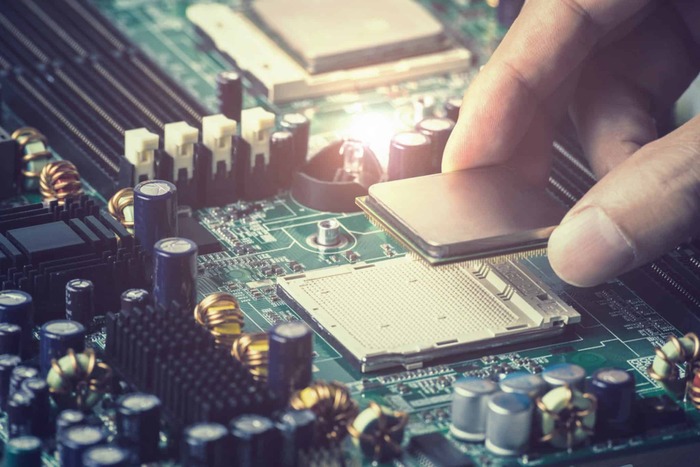
Let’s Clarify the CPU vs. GPU Discussion
Every organization has its own specific constraints and needs when it comes to AI implementations. This is why there is no one-size-fits-all answer to the GPU or CPU debate
While GPUs are the go-to for deep learning because of their capacity to execute thousands of parallel computations, CPUs shine in general-purpose processing and sequential tasks. GPUs are ideal for training intricate neural networks, but they demand significant power and specialized frameworks.
Conversely, CPUs are designed for versatility. They efficiently manage AI inference, control logic, and mixed workloads, making them well-suited for edge devices and real-time applications.
Unlike GPUs, CPUs can perform AI tasks alongside other computing functions, minimizing overhead. The challenge lies in determining when high throughput (GPUs) is essential versus when flexibility, power efficiency, and latency (CPUs) are more critical in AI workloads.
Top 5 Reasons Why CPUs Are Optimal for AI Inference
AI at the edge is set to grow as businesses aim for real-time decision-making without depending on cloud computing. Unlike GPUs, which require substantial computing power and consume more energy, CPUs provide a balanced solution by efficiently handling AI inference while also managing other tasks.
Below, we have outlined five key reasons why CPUs are the best choice for managing AI workloads in the edge AI ecosystem:
Power Efficiency
Edge devices often operate on limited power, making energy efficiency a top priority. CPUs consume significantly less power than GPUs, ensuring AI workloads run without draining battery life or requiring extensive cooling solutions.
Lower Latency for Real-Time Processing
AI inference at the edge requires immediate responses, whether in autonomous vehicles, industrial automation, or smart cameras. CPUs process AI models with minimal latency, making them ideal for applications where real-time decisions are critical.
Versatility and Workload Flexibility
Unlike GPUs, which are built for parallel computations, CPUs handle diverse tasks efficiently. This makes them well-suited for AI applications that require a mix of machine learning inference, control logic, and general computing—common in IoT and embedded systems.
Cost-Effectiveness
Deploying GPUs at scale can be expensive, both in terms of hardware and power consumption. CPUs, already present in most devices, reduce the need for specialized AI accelerators, lowering overall deployment costs without compromising performance.
Strong Software Optimization
AI frameworks like TensorFlow Lite/LiteRT, ONNX Runtime, and Intel OpenVINO are designed to maximize CPU performance. AI model optimization techniques like quantization and pruning allow AI models to run efficiently. This helps ensure fast and accurate inference on CPU-powered edge devices.
Edge AI in Action: CPU-Powered Real-World Applications
While GPUs dominate the training landscape, CPUs are quietly powering numerous successful edge AI deployments across industries. The following use cases demonstrate scenarios where CPU-based inference has proven particularly effective:
- Smart Retail Analytics: Store-level customer behavior tracking and inventory management systems using computer vision, operating on standard x86 hardware while maintaining low operational costs and reliable performance.
- Industrial Quality Control: Assembly line defect detection systems processing single-item inspections in real-time, where CPUs provide consistent low-latency inference without the overhead of GPU batch processing.
- Medical Device Integration: Portable diagnostic devices and monitoring equipment leveraging AI for instant analysis, where power constraints and space limitations make CPUs the practical choice.
- Smart Building Systems: Occupancy monitoring and environmental control systems require continuous but lightweight inference and operate efficiently on existing building management hardware.
Final Word
As we venture deeper into the era of ubiquitous AI, the true power lies not in blindly pursuing maximum computational capacity but in making strategic hardware choices aligned with specific deployment needs.
CPUs, far from being legacy technology, are emerging as a key differentiator in edge AI success stories.
The processor brings the best of both worlds – practicality and performance. This translates to a clear competitive advantage businesses need for their AI project needs.
